
Discover the key differences between residential and commercial aluminium doors in durability, security, and compliance, backed by expert advice from WCH Aluminium.
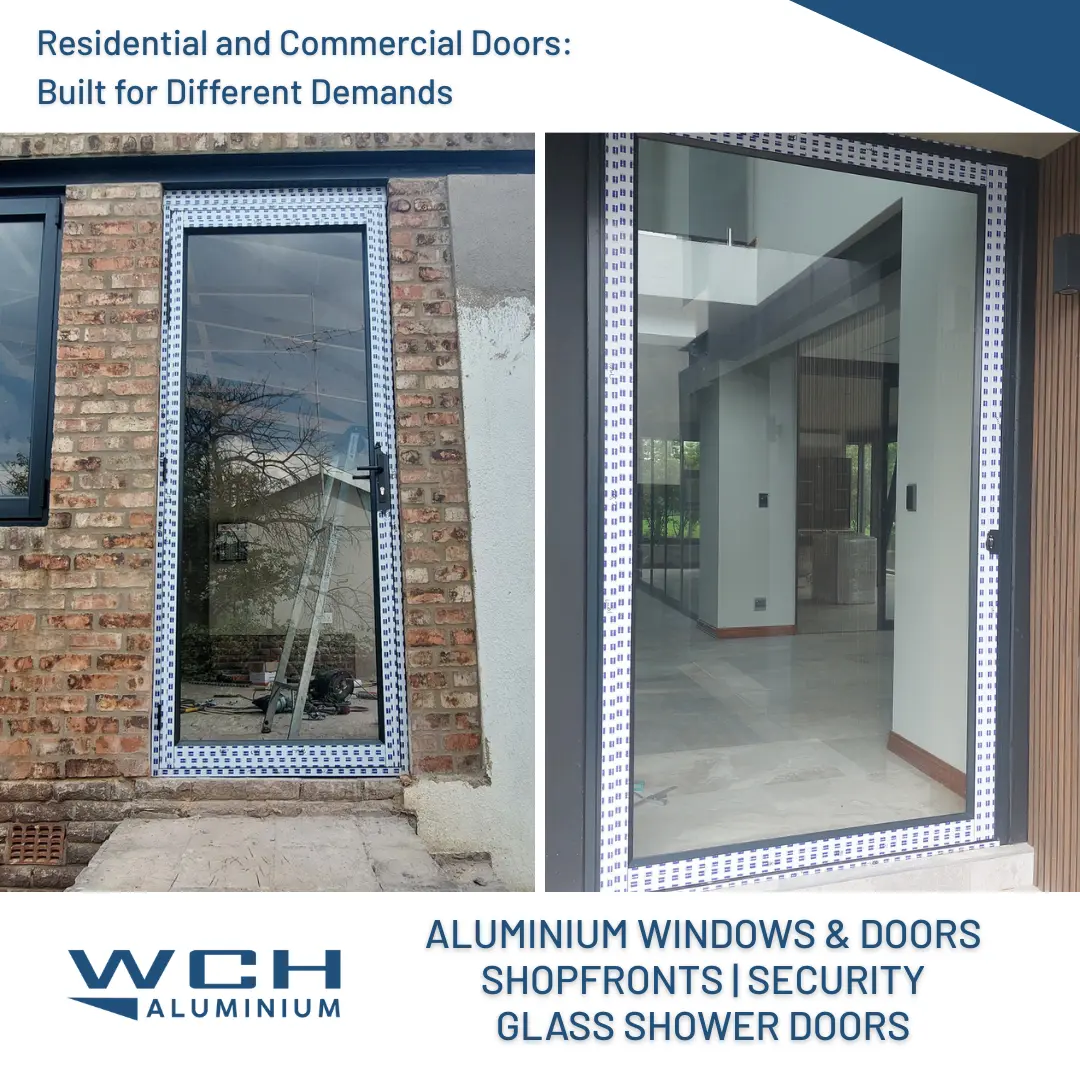
Aluminium doors have become a popular choice across both residential and commercial construction in South Africa because they offer strength, durability, and a clean, contemporary appearance. While doors designed for homes and those intended for commercial buildings may look similar at first glance, they serve very different purposes.
Every property has unique requirements based on how the space is used, who accesses it, and the level of performance expected from the doors. Understanding these differences helps property owners, architects, and builders select products that deliver the right balance of functionality, security, and aesthetics for their specific application. Choosing the wrong type of door can lead to premature wear, compliance issues, or an entrance that simply does not suit its purpose.
The primary difference between residential and commercial aluminium doors lies in how they are expected to perform on a daily basis. A home generally experiences relatively low traffic, with a front door, patio door, or sliding door opening and closing a handful of times each day. Commercial buildings, on the other hand, such as shopfronts, offices, clinics, and shopping centres, often have entrance doors opening and closing hundreds of times every day.
This increased usage means commercial doors must be engineered for greater durability and long-term reliability. Stronger frames, more robust hinges, and commercial-grade hardware are needed to handle continuous operation without loosening, sagging, or wearing out prematurely. Heavier glazing is also common in commercial applications, which places additional demands on the frame and the supporting hardware.
Residential aluminium doors are designed to withstand everyday use while maintaining their appearance for many years. With the right system and regular care, they provide reliable, smooth operation throughout the life of the home. The difference is not in the quality of the aluminium itself, but in how the door is designed, reinforced, and specified for the level of use it will face.
For property owners, this is an important consideration. A residential-grade door installed in a high-traffic commercial entrance is likely to need repairs and replacement much sooner, while over-specifying a commercial system for a home may add unnecessary cost.
Security requirements also vary significantly between the two sectors. Residential properties focus on protecting families and personal belongings, with features such as multi-point locking systems and reinforced frames providing peace of mind. Security glazing and quality hardware can further strengthen a home without compromising its appearance.
Commercial properties often require more advanced security measures. These may include access control systems, heavy-duty locking hardware, and integration with electronic security solutions such as intercoms, card readers, and alarm systems. Businesses must protect staff, stock, equipment, and sensitive information, making the security specification of the entrance a critical part of the design.
Commercial aluminium doors are also subject to a wider range of technical and regulatory considerations than residential installations. These requirements help ensure buildings remain safe, accessible, and suitable for their intended purpose. Building regulations may require commercial doors to meet specific standards for fire safety, accessibility, structural performance, and emergency egress. Depending on the type of building, doors may also need to accommodate automatic opening systems, panic hardware, or wider clear openings to comply with accessibility requirements.
Performance expectations are equally important. Commercial entrances often need to withstand higher wind loads, frequent operation, and greater environmental exposure without compromising functionality. Selecting the correct aluminium system helps maintain reliable performance while reducing ongoing maintenance requirements.
Residential projects are generally less constrained by these formal requirements, but they still benefit from careful specification. Weather resistance, sealing, and secure locking all contribute to a comfortable, safe home, particularly in South African conditions where doors are exposed to strong sun, wind, and seasonal rain.
Residential installations generally offer greater flexibility in design choices. Homeowners often place greater emphasis on creating bright, welcoming living spaces with large glass panels, slim sightlines, and finishes that complement the architectural style of the home. Sliding doors, folding doors, and hinged doors each offer different advantages depending on the layout and lifestyle requirements of the household. A stacking or folding system, for example, can open an entertainment area to the garden, while a slim-frame sliding door can maximise natural light in an open-plan living space.
Commercial buildings typically prioritise functionality alongside appearance. Entrances need to be practical, accessible, and representative of the business or organisation, creating a professional first impression for customers and visitors while handling heavy daily use. Frame colours, glazing choices, and door configurations can still be tailored to a company's branding, but they must work within the operational and regulatory needs of the building.
This is where working with an experienced supplier makes a real difference. A supplier with experience across both residential and commercial sectors understands these varying demands and can recommend solutions that are appropriate for each application. They can guide clients through material selection, system specifications, glazing options, hardware choices, and installation requirements to ensure every door performs as intended.
This expertise benefits architects, contractors, developers, and homeowners by helping avoid costly specification errors and ensuring the finished product meets both practical needs and design expectations. It also provides confidence that products are manufactured to high standards, supported by quality workmanship, and backed by reliable technical knowledge throughout the project.
Residential and commercial aluminium doors share many of the same material benefits, including strength, corrosion resistance, low maintenance, and a refined finish. However, they are designed to meet different performance requirements. Traffic, security, durability, compliance, and functionality all influence the most suitable solution for each environment.
Understanding these differences allows homeowners, business owners, architects, and developers to make informed decisions that deliver long-term value. By partnering with an experienced aluminium door supplier, every project can benefit from products that combine performance, quality, and design to meet its unique requirements.
Whether you are upgrading the entrance to your home or planning a new commercial development, the right door starts with the right advice. Make the right choice between residential and commercial aluminium doors for your next project with guidance from WCH Aluminium.
WCH Aluminium specialises in the supply and installation of high-quality aluminium solutions for residential and commercial properties. Using architectural-grade aluminium supplied by Wispeco Aluminium (Pty) Ltd, WCH Aluminium delivers durable, well-finished products designed to perform in South African conditions. The company is a registered member of SAGGA and AAAMSA, reflecting a commitment to industry standards, quality workmanship and reliable service. WCH Aluminium offers a full range of aluminium windows, doors, shopfronts, security solutions, frameless glass doors and shower doors, ensuring tailored solutions for each project.
The main difference is how the doors are expected to perform. Commercial doors are engineered for much heavier daily use, higher security demands, and stricter regulatory requirements, while residential doors focus on everyday home use, comfort, and design.
It is not recommended. Residential doors are not designed for the constant opening and closing of a commercial entrance and may wear out quickly. They may also fail to meet the safety, accessibility, and security requirements of the building.
Commercial doors often include more advanced security features, such as heavy-duty locking hardware and access control integration. However, residential doors can also be highly secure when fitted with multi-point locking systems, reinforced frames, and quality hardware.
Yes. Commercial doors may need to comply with requirements relating to fire safety, accessibility, structural performance, and emergency egress, depending on the type of building and how it is used.
Sliding, folding, stacking, and hinged doors are all popular residential options. Each offers different advantages depending on the layout of the home, the amount of natural light desired, and the connection to outdoor living spaces.
Yes. Commercial aluminium doors can be customised with a range of frame finishes, glazing options, and configurations to complement a company's branding and the architectural style of the building.
Not necessarily. Aluminium is naturally corrosion resistant and requires minimal upkeep. Commercial doors may need more regular hardware checks because of heavy use, but routine cleaning and periodic inspections are generally all that is required.
An experienced supplier understands the differences between residential and commercial requirements and can recommend the right system, glazing, and hardware for your project. This helps avoid costly specification errors and ensures a high-quality, long-lasting result.
